 Housing demand is influenced by many factors, including property size, school quality, transportation access, and local amenities. Increasingly, however, buyers are paying attention to how easily they can move around a neighborhood without relying entirely on a car....
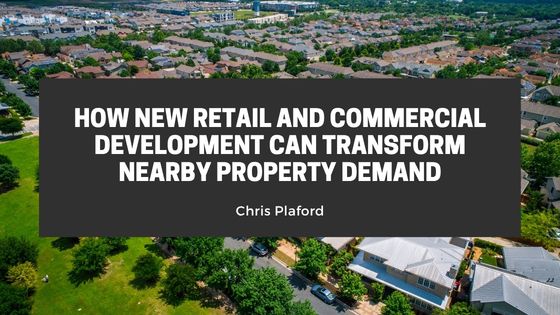 The Connection Between Commercial Growth and Residential Demand Real estate markets are influenced by much more than the homes themselves. The businesses, services, and amenities surrounding a neighborhood can play an important role in determining how attractive an...
 When evaluating residential property, buyers often focus on the home itself, its size, layout, and appearance. However, one of the most important influences on long term property values often exists beyond the property line. Infrastructure projects such as new roads,...
 When people evaluate a neighborhood, they often focus on factors such as schools, transportation, and local amenities. However, one feature that consistently contributes to long term desirability is access to green spaces and public parks. Parks do much more than...
 Remote work has fundamentally changed how people think about location. For decades, proximity to offices and urban business centers was a primary driver of housing demand. Today, with more professionals able to work from home, that requirement has weakened. As a...
 Walkability has become an increasingly important factor in how buyers evaluate neighborhoods. A walkability score typically measures how easily residents can access daily amenities such as grocery stores, restaurants, parks, schools, and public transportation without...
